
Home > News > CC In the World >
Camden Conference in the World ~ October 2025
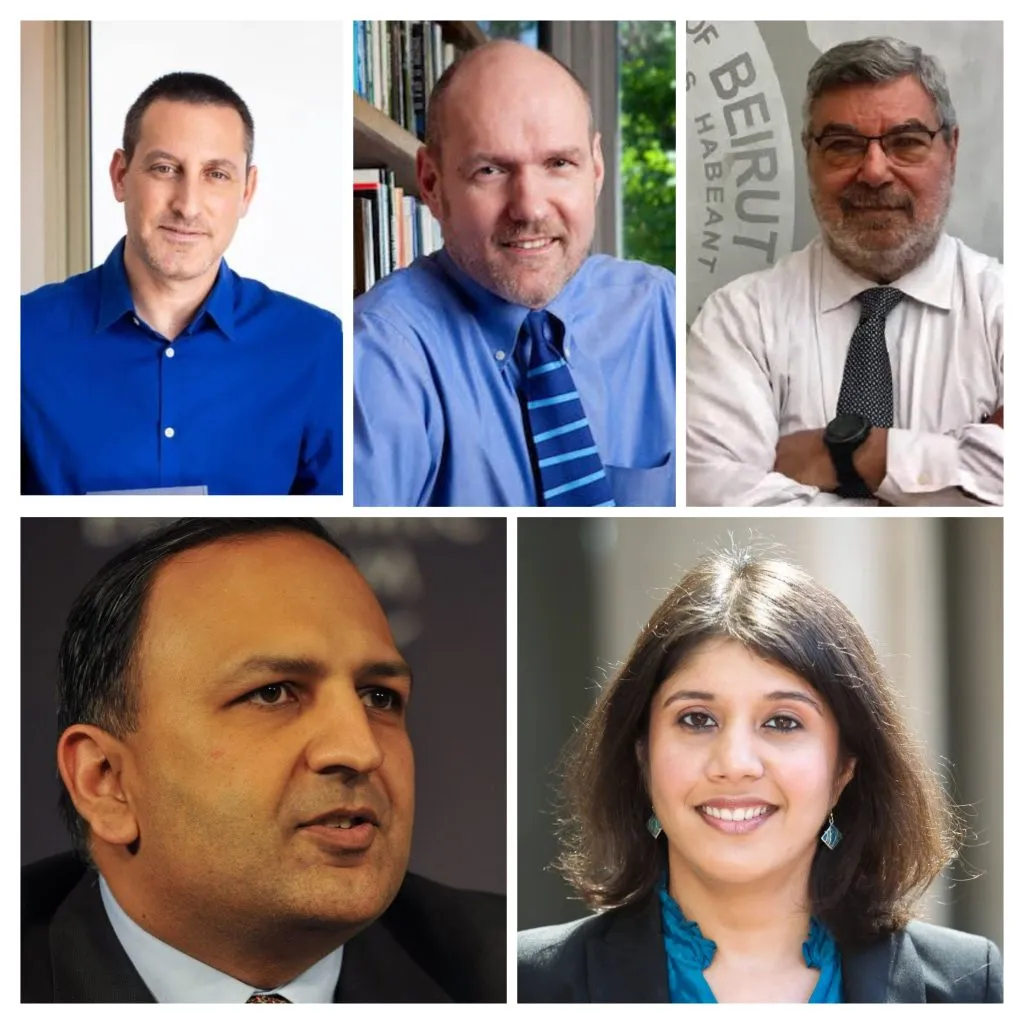
Israeli Prime Minister Benjamin Netanyahu called US President Donald Trump nearly an hour before Israel’s mid-September attack on Hamas facilities in Qatar, “early enough that the strike still could have been called off,” Axios correspondent and a scheduled speaker at Camden’s February, 2026, conference on “Today’s Middle East,” Barak Ravid, reported, quoting “three Israeli officials with direct knowledge.” Trump denied prior knowledge of Israel’s attack both before and after Ravid’s Axios article appeared. One of Ravid’s official Israeli sources told him: “If Trump had wanted to stop it [the bombing in Qatar], he could have. In practice, he didn’t.”
An alumnus of Camden’s 2005 Mideast conference, Rami Khouri, wrote in Qatar-based Al Jazeera that how the various parties respond to Israel’s bombing in central Doha, Qatar, could “shape the future” of US relations with the Arab Gulf states of the Gulf Cooperation Council, including Saudi Arabia and the United Arab Emirates, as well as Qatar itself. “If Arab leaders conclude that they cannot trust the US to safeguard their interests and security, they could move to join a broader global coalition to rein in Israel’s US-enabled militarism,” the frequent Al-Jazeera commentator and American University of Beirut distinguished fellow added.
“What do the killing of influencer Charlie Kirk and Israel’s unsuccessful attempt to kill some top Hamas officials by bombing Qatar have in common?, 2018 Camden keynoter and Belfer professor of international relations Stephen Walt wrote in his regular Foreign Policy column last month. Besides “obvious and important differences,” Walt says, “both acts can also be viewed as a symptom of the broader erosion of norms in contemporary politics, both between states and within them, and especially the tendency to see assassination as a legitimate political tactic.” Those without a subscription to FP can access Walt’s article here.
Contributing editor at the Indian Express and former president of the Centre for Policy Research in New Delhi, Pratap Bhanu Mehta, goes back to the 1920s and 1970s in search of historic parallels to the crisis he sees in democracy today across the world. He picks three widely disparate countries to make his points: “Across Nepal, France, and the US, there is one recurring theme: Young people feel robbed of their future,” the speaker at Camden’s 2024 India Conference recently wrote in the Indian Express. “The challenge is to turn shared anxiety into durable institutional solutions rather than just fleeting protest, and to imagine economic futures not defined by scarcity of work or zero-sum polarisation.”
Tanvi Madan, a senior foreign policy fellow at Brookings and another 2024 speaker in Camden, wrote in Foreign Affairs that Indian Prime Minister Narendra Modi’s August meeting with Chinese leader Xi Jinping in China “was neither a sudden response to Trump’s bullying nor a hurried reset of India’s relationship with China.” It was the culmination of nearly a year of effort to stabilize relations. “Those efforts … don’t obviate the fact that the rivalry between the two Asian giants persists.” However, she adds a note of caution for US policymakers: “Trump’s approaches to China and India have already strengthened the hands of those in India making the case for greater openness to China.”
Student Education Fund
Help ensure that future generations are informed and engaged on crucial global issues.