
Seventy-five years after independence, India was on track to have both the world’s largest population and the second largest economy. In 2024, it was pursuing a unique path as a democracy and as an ambitious player in global affairs. Possession of nuclear weapons gave it prestige globally and confidence in its security amid unstable neighbors. Domestically, a diverse, complicated, multicultural mosaic of issues—from poverty, caste, religion, to repression of women and minorities—posed unrelenting challenges for democratic institutions. The 37th Annual Camden Conference, India: Rising Ambitions, Challenges at Home, looked at how a younger generation of Indian leaders choose its priorities, and asked what’s at stake for China, Russia and the United States as India expanded its role in the global economy and became a more assertive leader in the Indo-Pacific region?
2024 CAMDEN CONFERENCE
February 16-18, 2024
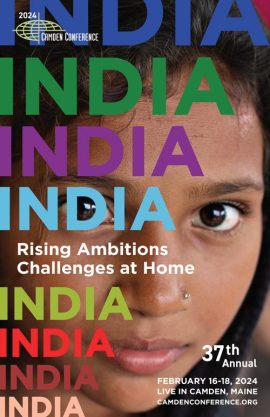
(View Program PDF)
Conference

India's Post-Colonial History
Professor Pratap Bhanu Mehta’s brief but multi-faceted account of the history of India from its independence, in 1947, up to the present day. "It is particularly important," says Mehta, "to de-exoticize India and try to think of it in familiar terms." These engaging remarks were delivered at the 2024 Camden Conference.
India's Politics and Governance
Could electoral democracy in India prove the undoing of its liberal constitution? Professor Ashutosh Varshney sheds light on this "essential paradox" at the 2024 Camden Conference.
Repression and Resistance in India
Brown University Professor Prerna Singh describes the three major sources of diversity in India as religion, caste and language. On the one hand, diversity in modern India is not a "curse" leading to low development and conflict. On the other hand, India's current government increasingly embraces Hindutva, the ideology that justifies Hindu nationalism, and this marks a move away from the secularism enshrined in its constitution. Remarks delivered at the 2024 Camden Conference, held February 16-18, in Camden, Maine.
India's Economy
Arvind Subramanian, Senior Fellow at the Peterson Institute for International Economics, and former Chief Economic Advisor to the Government of India, gives a sweeping overview of India's economy. Following independence in 1947, democratic India immediately instituted full suffrage, only to fail to achieve economic growth on par with other Asian economies. This state of affairs is now changing. Quickly. Remarks delivered at the 2024 Camden Conference, held February 16-18, in Camden, Maine.
Discussion and Questions with Ashutosh Varshney and Pratap Bhanu Mehta
A Q&A session from the 2024 Camden Conference following talks by Princeton Professor Pratap Bhanu Mehta, "India's Post-Colonial History," and Brown Professor Ashutosh Varshney, "India's Politics and Governance." Moderated by American Public Media's David Brancaccio.
Discussion and Questions with Ashley J. Tellis & Ambassador Nirupama Rao
A Q&A session from the 2024 Camden Conference following talks by Ashley J. Tellis, Tata Chair for Strategic Affairs and Senior Fellow at the Carnegie Endowment for International Peace, and Ambassador Nirupama Rao. The title of Tellis' talk had been "India's Regional Role," while Ambassador Rao's was "How India Sees the World." Moderated by American Public Media's David Brancaccio.
India's Regional Role
India has been "walking a tightrope" since its 1947 independence, but has managed to expand its global reach and “use the world in order to leverage its own rise to power.” So says Ashley J. Tellis, Senior Fellow and Tata Chair for Strategic Affairs at the Carnegie Endowment for International Peace. Remarks delivered at the 2024 Camden Conference, held February 16-18, in Camden, Maine.
India's Global Aspirations
India wants to be an independent power and the key phrase is "strategic autonomy." India will not form alliances, which pledge military support in the event of war, instead choosing to form "partnerships," including partnerships with the U.S. Remarks delivered by Tanvi Madan, senior fellow in the Center for Asia Policy Studies in the Foreign Policy program at the Brookings Institution in Washington, at the 2024 Camden Conference, held February 16-18, in Camden, Maine.
Role of the Media and the Modi P.R. Machine in India
New York Times correspondent Emily Schmall gives a glimpse into the chaotic world of journalism in India, and of a dedicated press fighting to keep it free. Remarks delivered at the 2024 Camden Conference, held February 16-18, in Camden, Maine.
Discussion and Questions with Tanvi Madan & Daniel Markey
How India's Growing Global Role May Shape U.S. Policy
Final Panel of all Speakers with Audience Q&A, Camden Conference 2024
Daniel Markey on US Foreign Policy: Balancing Interests and Values
The exchange highlights the ongoing challenge for US policymakers to uphold American values while securing concrete national interests in an imperfect world. Finding the right balance remains central to effective US global leadership.
David Brancaccio
Moderator
Fernand De Varennes
Speaker
Tanvi Madan
Speaker
Daniel Markey
Speaker
Pratap Bhanu Mehta
Speaker
Ambassador Nirupama Rao
Keynote Speaker
Emily Schmall
Speaker
Prerna Singh
Speaker
Arvind Subramanian
Speaker
Ashley J. Tellis
Speaker
Ashutosh Varshney
Speaker


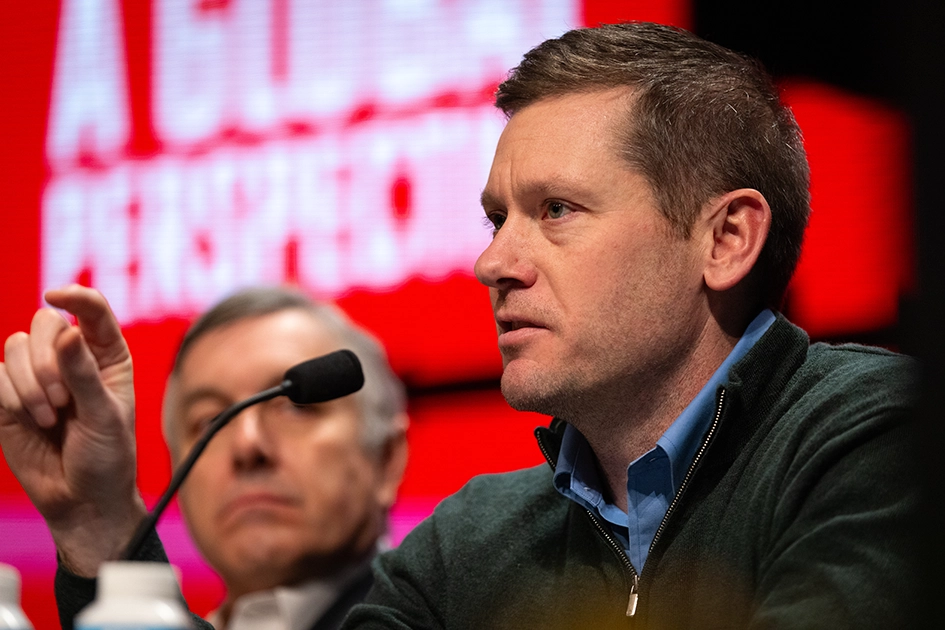
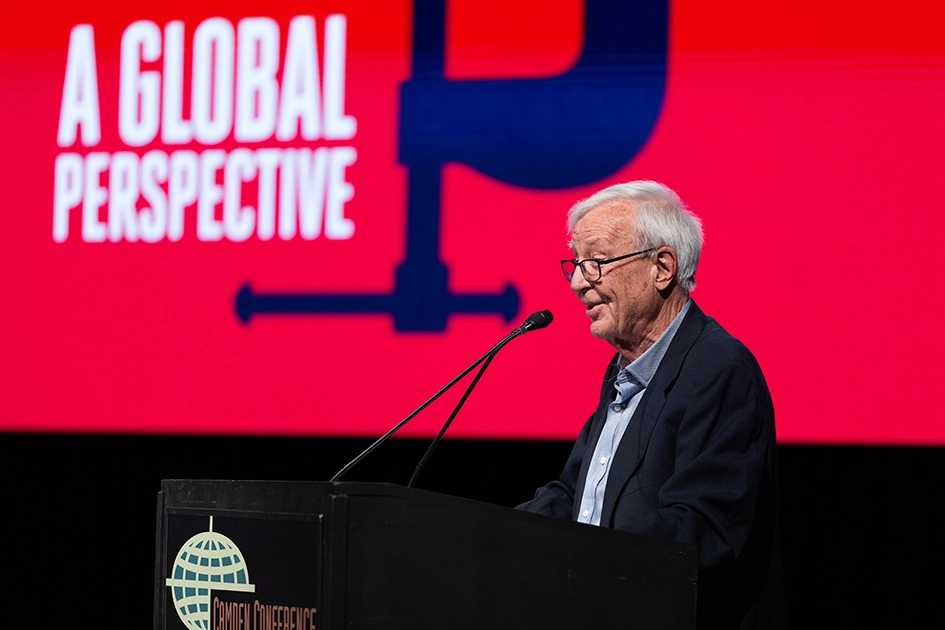
How India Sees the World
Ambassador Nirupama Rao asserts that India does not see the world through either a Western or Eastern ideological lens. “Our prime minister, Mr. Narendra Modi, says that this need not be an era of war…that climate change, terrorism and pandemics are the greatest challenges we face. We believe technology and new frontiers can change the story of our development, leapfrogging us into the future that awaits.” Remarks delivered at the 2024 Camden Conference, held February 16-18, in Camden, Maine. ...